

Article Archives
- February 2024
- January 2024
- September 2023
- August 2023
- July 2023
- May 2023
- April 2023
- March 2023
- February 2023
- November 2022
- October 2022
- September 2022
- August 2022
- July 2022
- June 2022
- May 2022
- February 2022
- January 2022
- November 2021
- October 2021
- September 2021
- August 2021
- July 2021
- June 2021
- May 2021
- April 2021
- March 2021
- February 2021
- January 2021
- December 2020
- November 2020
- October 2020
- September 2020
- August 2020
- July 2020
- June 2020
- May 2020
- April 2020
- March 2020
- February 2020
- January 2020
- December 2019
- November 2019
- October 2019
- September 2019
- August 2019
- July 2019
- June 2019
- May 2019
- April 2019
- March 2019
- February 2019
- January 2019
- December 2018
- November 2018
- October 2018
- September 2018
- August 2018
- July 2018
- June 2018
- May 2018
- April 2018
- March 2018
- February 2018
- January 2018
- December 2017
- November 2017
- October 2017
- September 2017
- August 2017
- July 2017
- June 2017
- April 2017
- February 2017
- January 2017
- December 2016
- November 2016
- October 2016
- September 2016
- August 2016
- July 2016
- June 2016
- January 2016
- December 2015
- November 2015
- October 2015
- September 2015
- August 2015
- July 2014
- June 2014
- May 2014
- April 2014
- March 2014
- September 2013
- April 2013
- March 2013
- October 2012
- All Current Articles
Article Categories
- Awards & Grants
- Bio Fuels
- Case Studies
- Clean Cities and Communities
- Clean Fuels Events - National/Regional
- Clean Fuels Events - Statewide
- Clean Fuels Funding
- Clean Fuels Infrastructure
- CNG
- Electric Vehicles
- Emissions & Fuel Economy
- Energy Efficient Mobility Systems (EEMS)
- EPA Advance Program
- Home Page
- Hydrogen Fuel Cell
- LCF Members
- LCF Press Releases
- Louisiana Department of Environmental Quality
- Louisiana News
- National News
- News
- Office of Critical Minerals and Energy Innovation
- Propane
- Tax Incentives
- Technical Workshops
- Webinar
- All Current Articles
Clean Fuel News
Vermont proposes incentives to promote the purchase of EVs
Originally posted by Dave Kovaleski | July 16, 2019 | DailyEnergyInsider | Original Article
Vermont government and the state’s largest utility company are boosting efforts to promote electric vehicles and reduce greenhouse gases through a variety of initiatives, including an incentive program for low- and moderate-income families and investments in charging infrastructure.
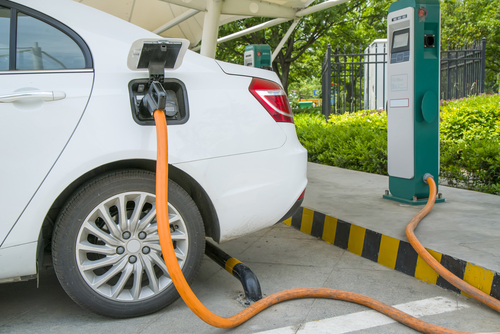
“Electrifying the transportation sector will help clean the air and keep millions of dollars within our economy, Vermont Gov. Phil Scott said at a news conference last week. “While more work needs to be done, Vermont has taken strong steps toward a renewable transportation sector.” He was joined by other energy sector leaders in the public and private sectors, including Mary Powell, president and CEO of Green Mountain Power.
The transportation sector accounts for about 45 percent of greenhouses gases in the state, which is the largest single source. Through the state’s Comprehensive Energy Plan, the Scott Administration is seeking to offset emissions by increasing the share of renewable energy in the transportation sector. The goal is to reduce greenhouse gases in the sector through the use of EVs by 10 percent by 2025 and 80 percent by 2050. To accomplish that objective, the plan is to have approximately 50,000 plug-in electric vehicles (PEVs) registered in Vermont by 2025. Currently, there are only about 3,100.
To do that, the Scott Administration has proposed several initiatives. In his fiscal year 2020 budget, the governor included $1.1 million in incentives to help low- and moderate-income households – those with median annual incomes under $92,000 – purchase or lease electric vehicles. Further, to facilitate the growth of commercial charging stations, Scott proposed removing state jurisdiction by the Public Utility Commission (PUC) and Public Service Department over charging infrastructure.
The state is also committed to transitioning its fleet of state-owned vehicles to EVs. Scott, working with lawmakers, has set a goal of having 50 percent of vehicles purchased or leased by the state Department of Buildings and General Services be hybrid or EVs.
In addition, the state has provided more than $1 million in grants to build 30 charging stations across the state, including Level 2 (four-hour charge time) and Level 3 fast charging (20-minute charge time) stations. The goal, said Scott, is to ensure that all residents will live within 30 miles of a Level 3 station. The 30 new charging stations are expected to come online in 2019, adding to the 26 Level 3 and 191 Level 2 charging sites already up and running.
Powell, the president and CEO of Green Mountain Power (GMP), commended the state’s commitment to reducing emissions and outlined what her company is doing to promote EVs to its 265,000 customers. Specifically, GMP is offering rebates of up to $2,500 for customers who buy or lease a plug-in hybrid or electric vehicle. All customers who buy a hybrid or EV under $60,000 will receive a $1,500 rebate from GMP for a new car and $750 for a used car. An additional $1,000 rebate is available to qualifying low- and moderate-income individuals or families. Further, all customers who buy a new EV are eligible for a free in-home Level 2 charger – which is valued at $600. Many auto dealers in the state are offering additional rebates.
