

Article Archives
- February 2024
- January 2024
- September 2023
- August 2023
- July 2023
- May 2023
- April 2023
- March 2023
- February 2023
- November 2022
- October 2022
- September 2022
- August 2022
- July 2022
- June 2022
- May 2022
- February 2022
- January 2022
- November 2021
- October 2021
- September 2021
- August 2021
- July 2021
- June 2021
- May 2021
- April 2021
- March 2021
- February 2021
- January 2021
- December 2020
- November 2020
- October 2020
- September 2020
- August 2020
- July 2020
- June 2020
- May 2020
- April 2020
- March 2020
- February 2020
- January 2020
- December 2019
- November 2019
- October 2019
- September 2019
- August 2019
- July 2019
- June 2019
- May 2019
- April 2019
- March 2019
- February 2019
- January 2019
- December 2018
- November 2018
- October 2018
- September 2018
- August 2018
- July 2018
- June 2018
- May 2018
- April 2018
- March 2018
- February 2018
- January 2018
- December 2017
- November 2017
- October 2017
- September 2017
- August 2017
- July 2017
- June 2017
- April 2017
- February 2017
- January 2017
- December 2016
- November 2016
- October 2016
- September 2016
- August 2016
- July 2016
- June 2016
- January 2016
- December 2015
- November 2015
- October 2015
- September 2015
- August 2015
- July 2014
- June 2014
- May 2014
- April 2014
- March 2014
- September 2013
- April 2013
- March 2013
- October 2012
- All Current Articles
Article Categories
- Awards & Grants
- Bio Fuels
- Case Studies
- Clean Cities and Communities
- Clean Fuels Events - National/Regional
- Clean Fuels Events - Statewide
- Clean Fuels Funding
- Clean Fuels Infrastructure
- CNG
- Electric Vehicles
- Emissions & Fuel Economy
- Energy Efficient Mobility Systems (EEMS)
- EPA Advance Program
- Home Page
- Hydrogen Fuel Cell
- LCF Members
- LCF Press Releases
- Louisiana Department of Environmental Quality
- Louisiana News
- National News
- News
- Office of Critical Minerals and Energy Innovation
- Propane
- Tax Incentives
- Technical Workshops
- Webinar
- All Current Articles
Clean Fuel News
NREL: EVs Need 300 Miles of Range for Most Consumers
The National Renewable Energy Laboratory (NREL) has released a new report, “Consumer Views on Plug-in Electric Vehicles-National Benchmark Report,” that finds, among other things, approximately 24% of consumers plan to buy a plug-in hybrid or electric vehicle (EV) as their next purchase.
The report, posted here, interviewed 1,015 households on their sentiments toward plug-in hybrids and EVs. In terms of plug-in vehicle awareness, the study found the following:
- 48% of respondents could name a specific plug-in vehicle make and model;
- 49% have reported seeing a plug-in vehicle in parking lots;
- 52% have stated that plug-in hybrids are just as good or better than conventional gasoline vehicles;
- 45% stated pure EVs are just as good or better than conventional gasoline vehicles;
- 24% said they would consider or expect to purchase or lease a plug-in hybrid as their next vehicle; and
- 20% said they would consider or expect to purchase or lease a pure EV as their next vehicle.
With regard to pure EVs, consumers responded in the following ways:
- 56% of respondents said a pure EV would need at least 300 miles of driving range on a single charge for them to consider buying one;
- 55% said they would not consider a pure EV because it is too expensive;
- 70% of respondents plan to pay $30,000 or less on their next vehicle, and 42% plan to spend $20,000 or less;
- 53% of respondents regularly park near home electrical outlets;
- 51% of respondents would be willing to pay incremental costs for pure EVs; and
- 18% are aware of charging stations on routes they regularly drive.
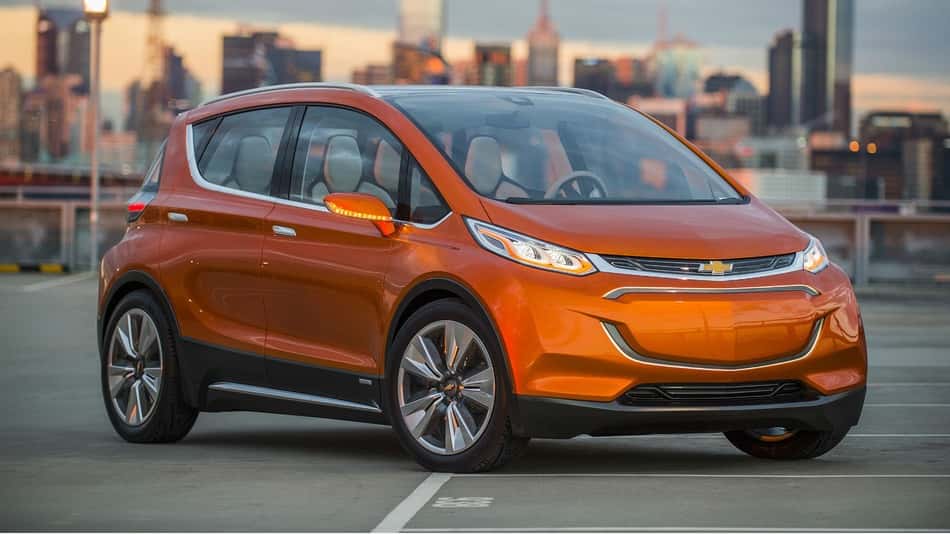
Although the NREL study suggests that many consumers remain wary of pure EVs, Tesla Motors recently took over 325,000 reservations for its upcoming Model 3, a $35,000 EV with at least 215 miles of driving range per charge. GM’s Chevrolet Bolt EV has also generated a lot of consumer interest, although the automaker is not taking reservations for it just yet.
Article via NGTNews
