
FHWA Alternative Fuel Corridors
Advancing America's 21st Century Transportation Network

Alternative Fuel Station Signage
Via fhwa.dot.gov - With the designation of alternative fuel corridors, FHWA is establishing a national network of alternative fueling and charging infrastructure along national highway system corridors. FHWA intends to support the expansion of this national network through a process that:
- provides the opportunity for formal corridor designations on an annual basis;
- ensures that corridor designations are selected based on criteria that promote the "build-out" of a national network;
- develops national signage and branding to help catalyze applicant and public interest;
- encourages multi-State and regional cooperation and collaboration; and,
- brings together a consortium of stakeholders including state agencies, utilities, alternative fuel providers, and car manufacturers to promote and advance alternative fuel corridor designations in conjunction with the Department of Energy
LCF worked closely with the state's Department of Environmental Quality to complete their proposals to the FHWA for rounds 2 and 3. For round 2, LCF participated in and helped lead two outreach meetings with the DEQ and worked with the Capital Region Planning Commission to create maps of our fueling infrastructure that were used in both presentations and in the final proposal to FHWA.
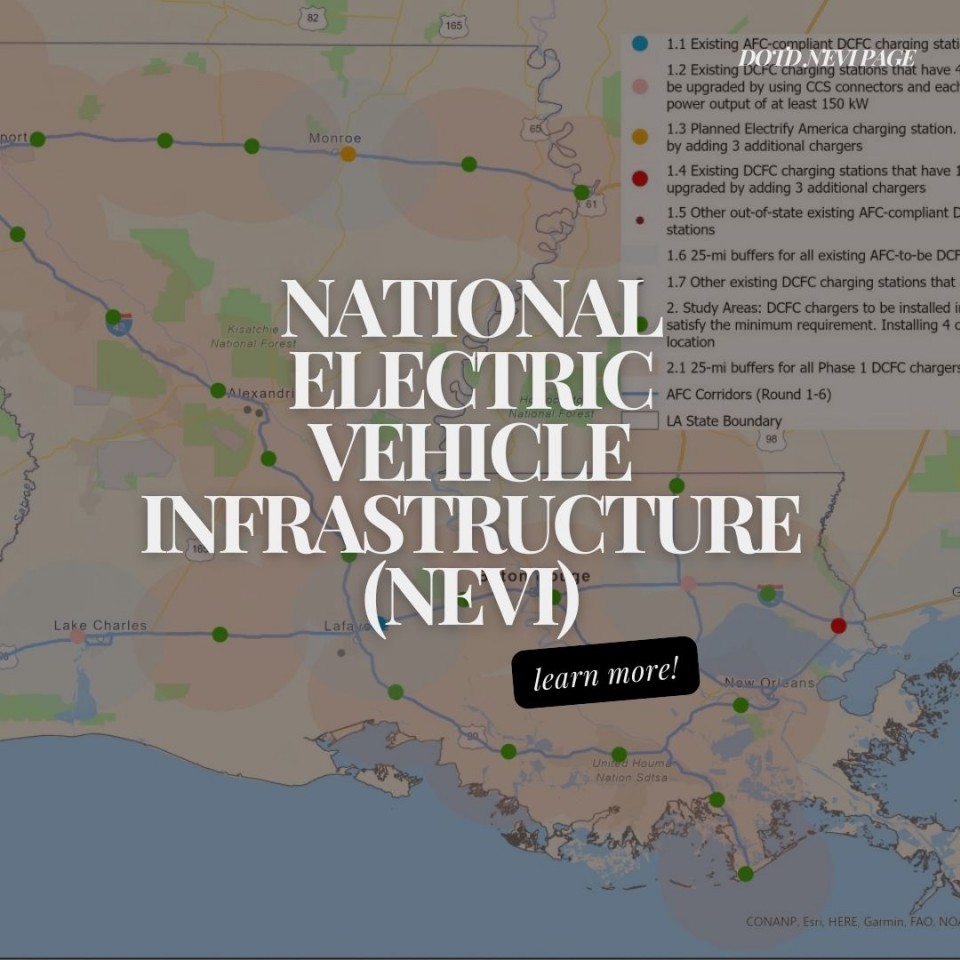
The FHWA Alternative Fuels Corridors program has become even more important since the passing of the Bipartisan Infrastructure Law (BIL / IIJA), which provided significant funding for alternative fuel infrastructure across the US and tied several of its funding programs to the Corridors program. The primary example of this is the National Electric Vehicle Infrastructure (NEVI) Program, which dedicated $5b to electric vehicle charging along approved Electric Vehicle Corridors. To ensure that Louisianans could access these funding programs established by the BIL, Louisiana Clean Fuels worked closely with the Louisiana Department of Transportation and Development (DOTD) to apply for new Corridors to be established for Hydrogen and Electric Vehicles in Rounds 6 and 7 of the program (note that prior to these rounds, Louisiana already had a robust corridor network for natural gas and propane).
Corridor Requirements
In order for an interstate to qualify for AFV Corridor signage, the following requirements must be met:

Source: Page 3
Approved Corridors
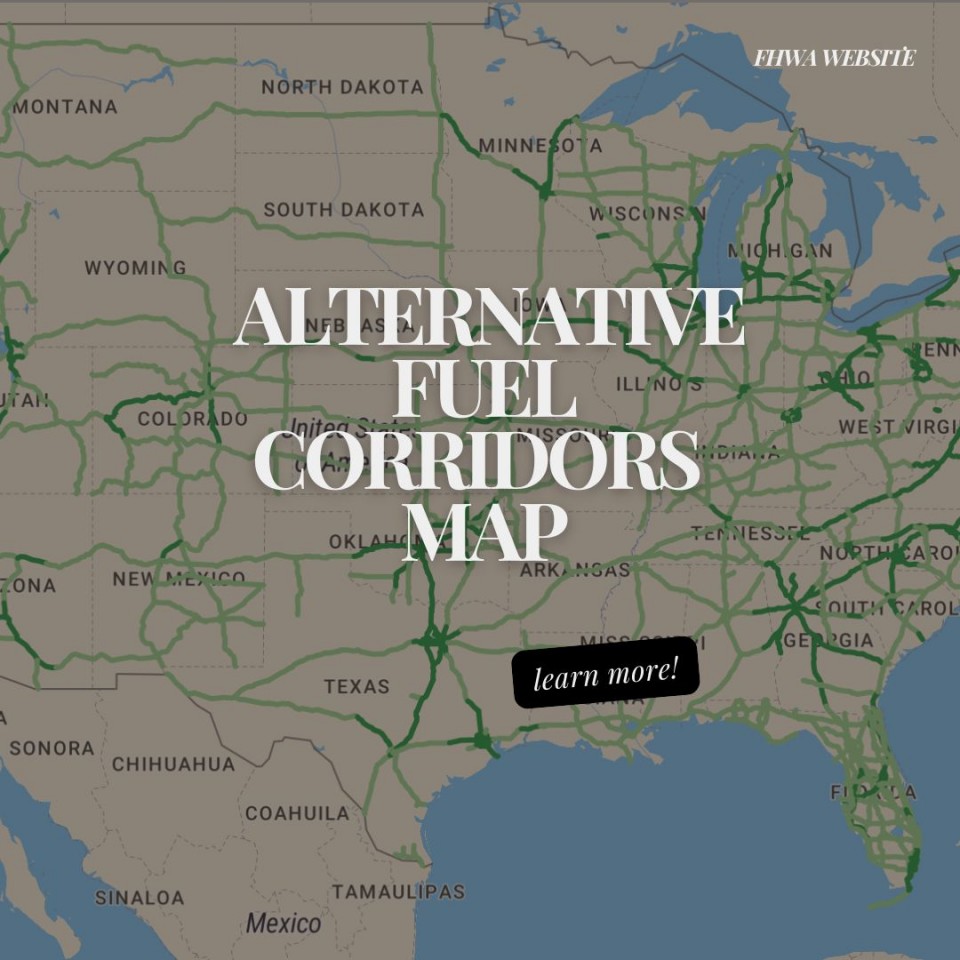
In Louisiana, we now have corridors for all of the alternative fuels across the majority of our interstate system, as well as Electric corridors for Hwy 90 between Lafayette and New Orleans, Hwy 3235 down to Port Fourchon, and Hwy 1 down to Port Fourchon in support of the NEVI program and to align with evacuation routes in emergency situations. In the future, Louisiana Clean Fuels will continue to work with the DOTD on the Corridors program to ensure that Louisiana is prepared to access federal funding for new infrastructure. We will also continue to work with the State to continue to install wayfinding signage across our Corridor network to improve public and fleet awareness of alternative fuel infrastructure across Louisiana.
For an interactive map of approved corridors, please visit the following page: https://hepgis-usdot.hub.arcgis.com/pages/alternative-fuel-corridors