

Article Archives
- February 2024
- January 2024
- September 2023
- August 2023
- July 2023
- May 2023
- April 2023
- March 2023
- February 2023
- November 2022
- October 2022
- September 2022
- August 2022
- July 2022
- June 2022
- May 2022
- February 2022
- January 2022
- November 2021
- October 2021
- September 2021
- August 2021
- July 2021
- June 2021
- May 2021
- April 2021
- March 2021
- February 2021
- January 2021
- December 2020
- November 2020
- October 2020
- September 2020
- August 2020
- July 2020
- June 2020
- May 2020
- April 2020
- March 2020
- February 2020
- January 2020
- December 2019
- November 2019
- October 2019
- September 2019
- August 2019
- July 2019
- June 2019
- May 2019
- April 2019
- March 2019
- February 2019
- January 2019
- December 2018
- November 2018
- October 2018
- September 2018
- August 2018
- July 2018
- June 2018
- May 2018
- April 2018
- March 2018
- February 2018
- January 2018
- December 2017
- November 2017
- October 2017
- September 2017
- August 2017
- July 2017
- June 2017
- April 2017
- February 2017
- January 2017
- December 2016
- November 2016
- October 2016
- September 2016
- August 2016
- July 2016
- June 2016
- January 2016
- December 2015
- November 2015
- October 2015
- September 2015
- August 2015
- July 2014
- June 2014
- May 2014
- April 2014
- March 2014
- September 2013
- April 2013
- March 2013
- October 2012
- All Current Articles
Article Categories
- Awards & Grants
- Bio Fuels
- Case Studies
- Clean Cities and Communities
- Clean Fuels Events - National/Regional
- Clean Fuels Events - Statewide
- Clean Fuels Funding
- Clean Fuels Infrastructure
- CNG
- Electric Vehicles
- Emissions & Fuel Economy
- Energy Efficient Mobility Systems (EEMS)
- EPA Advance Program
- Home Page
- Hydrogen Fuel Cell
- LCF Members
- LCF Press Releases
- Louisiana Department of Environmental Quality
- Louisiana News
- National News
- News
- Office of Critical Minerals and Energy Innovation
- Propane
- Tax Incentives
- Technical Workshops
- Webinar
- All Current Articles
Clean Fuel News
UPS turns to Arrival for some very stylish electric delivery vans
Originally posted by Bengt Halvorson | February 4, 2020 | Green Car Reports | Original Article
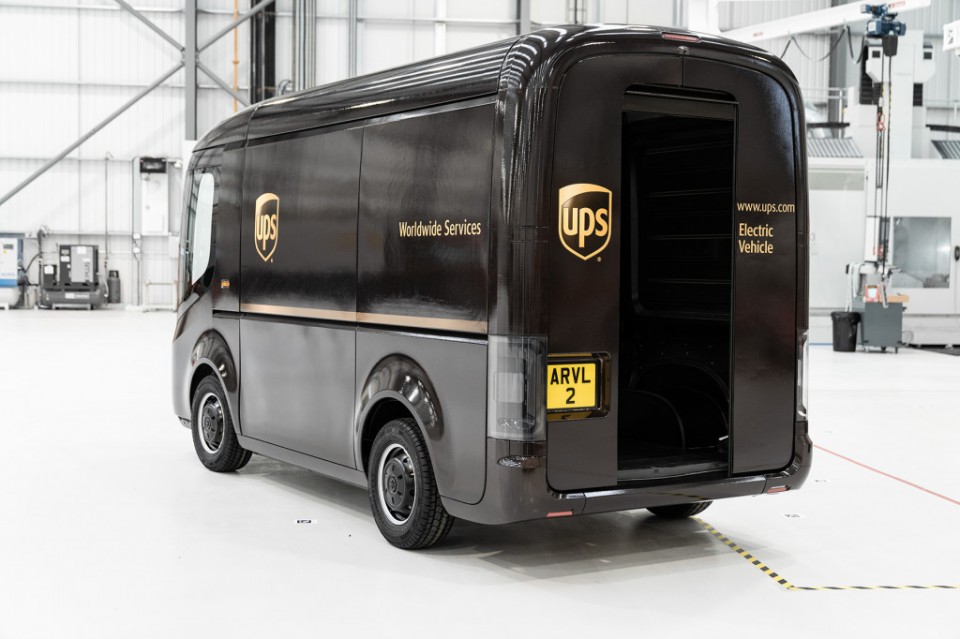 Another relatively new electric-vehicle company has scored a major deal to electrify some of the world’s delivery fleets.
The shipping and logistics company UPS announced last week that it’s investing in the UK commercial electric-vehicle maker Arrival—and ordering 10,000 electric delivery vehicles from the company.
With the investment for an undisclosed amount, UPS gets an equity investment for a minority stake, and it follows soon after an investment from Hyundai and Kia in Arrival last month (that one for an announced amount of $110 million).
The UPS deal includes both a commitment to purchase 10,000 Arrival EVs specially made for UPS and “priority access to purchase additional electric vehicles.”
UPS currently has a total fleet of 123,000 delivery vehicles, so it's a small but meaningful move toward reducing or offsetting the increase in delivery-van emissions due to e-commerce deliveries.
The two companies will also co-develop Advanced Driver Assistance Systems (ADAS), which includes automation at UPS shipping depots. From the sound of it, the projects might fit nicely with Arrival’s co-development projects with Hyundai and Kia.
Arrival makes its own core vehicle components and modularizes its platform so as to accommodate a wide range of vehicle types and sizes. The company claims a 50% savings in operational costs versus comparable internal-combustion vehicles, and it first gained attention when it placed some its very distinctive vehicles in service in 2017 for the UK’s Royal Postal Service.
The UPS vehicles will be put to use in both Europe and North America, while it notes that Arrival will make the vehicles for them in micro-factories, with the 10,000-vehicle lot to be delivered starting later this year in the UK, with completion by 2024.
Altogether, the structure of the UPS/Arrival deal is like that of Amazon investing in Michigan’s Rivian—only the Rivian deal was quite a bit larger. Under that relationship, Amazon first led a $700 investment round and then some months later the two companies announced an agreement in which Rivian would provide 100,000 fully electric vans to Amazon by 2030, with the first 10,000 on the road as early as 2022.
